 Enterprise AI Platforms
Apify Review (2026): Governed Web Data Pipelines for Enterprises
Reviewed and last updated: . Pricing checked against the vendor’s published plans at review time.
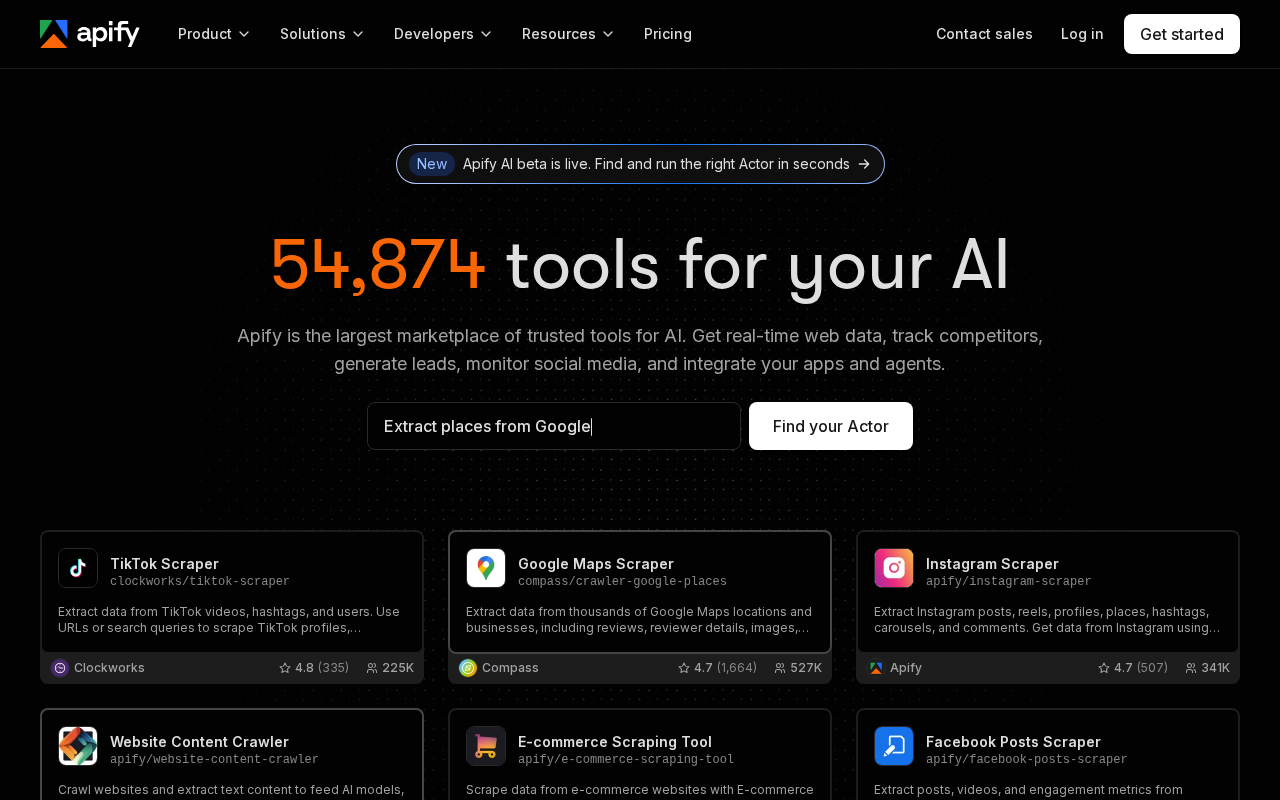
Every data team we’ve talked to has the same skeleton in the closet: scraping scripts scattered across laptops and cron jobs, each one load-bearing, none of them documented. Apify exists to clean that up. Scraping jobs become “actors” that are versioned, scheduled, observable, and shared, with proxy management and storage handled by the platform.
What it does
You build actors yourself with the SDKs, or start from a large marketplace of pre-built ones covering common sources. Jobs run on schedules, can run for a long time without babysitting, and deliver structured datasets over API to wherever your analytics live. In practice it turns web data from a collection of hacks into a pipeline someone can actually be on call for.
The good
- Reusable, observable jobs instead of script sprawl. When a scrape breaks, you know which one, where, and why.
- The actor marketplace saves real build time on standard sources.
- Proper developer tooling. It fits into data engineering workflows rather than beside them.
The caveats
It’s a technical product. An analyst without engineering support will lean on pre-built actors or stall. And the platform doesn’t absolve you of compliance: what you extract and how you use it is still your responsibility. For small, occasional pulls, something lighter like Browse AI may be all you need.
When it makes sense
The tipping point is when web data feeds something that matters: strategic dashboards, internal metrics, impact reporting. At that point governance and reliability stop being nice-to-haves, and this is the platform built for it. Data engineering, analytics, and competitive intelligence teams usually own the call.
Our take
If web data is infrastructure for you, buy the infrastructure-grade tool.
What it costs
Apify publishes transparent usage-based tiers (as of August 2026): a Free plan with $5 of monthly platform credits, Starter at $29/month, Scale at $199/month, and Business at $999/month — each including that amount of platform usage, with compute-unit rates dropping at higher tiers ($0.20/CU on Starter, $0.16 on Scale, $0.13 on Business). Annual billing takes roughly 10% off, and custom enterprise deals add SLAs and managed scraping. The model rewards predictable workloads: you’re effectively pre-buying compute.
Pros and cons
Where it wins
- Jobs are versioned, scheduled, and observable — the anti-script-sprawl platform
- Large marketplace of pre-built actors cuts build time on common sources
- Transparent, published pricing from $0 to enterprise
- Proper SDKs and API; fits real data-engineering workflows
Where it hurts
- Technical product: analysts without engineering support will stall or lean on pre-built actors
- Compliance for what you scrape and how you use it stays your responsibility
- Costs need monitoring: usage-based pricing punishes unoptimized crawlers
Alternatives to consider
Browse AI is the no-code, team-level counterpart: minutes to first data, thinner governance. Zyte and Bright Data compete at the managed/enterprise end, generally with heavier sales processes. Apify sits in the productive middle: self-serve, but built for pipelines.
Frequently asked questions
Is Apify worth it in 2026?
For organizations where web data feeds dashboards, metrics, or reporting: yes, it’s our core pick for governed data pipelines. For occasional one-off scrapes, a lighter no-code tool like Browse AI costs less and demands less skill.
What does Apify cost?
A free tier includes $5 of monthly usage; paid plans run $29 (Starter), $199 (Scale), and $999 (Business) per month, each bundling that amount of platform usage with cheaper compute at higher tiers. Enterprise terms are custom.
Apify vs Browse AI: which should we choose?
Browse AI when an analyst needs data this week without engineering. Apify when web data is infrastructure: versioned jobs, monitoring, governance, and API delivery. Many teams start on Browse AI and graduate.
Transparency: EnterpriseAI.app may receive referral revenue if you sign up through links on this page, at no additional cost to you. Evaluations are completed before referral relationships are considered — see our methodology and disclosure.