 Enterprise AI Platforms
Synthesia Review (2026): AI Video for Enterprise Training and Comms
Reviewed and last updated: . Pricing checked against the vendor’s published plans at review time.
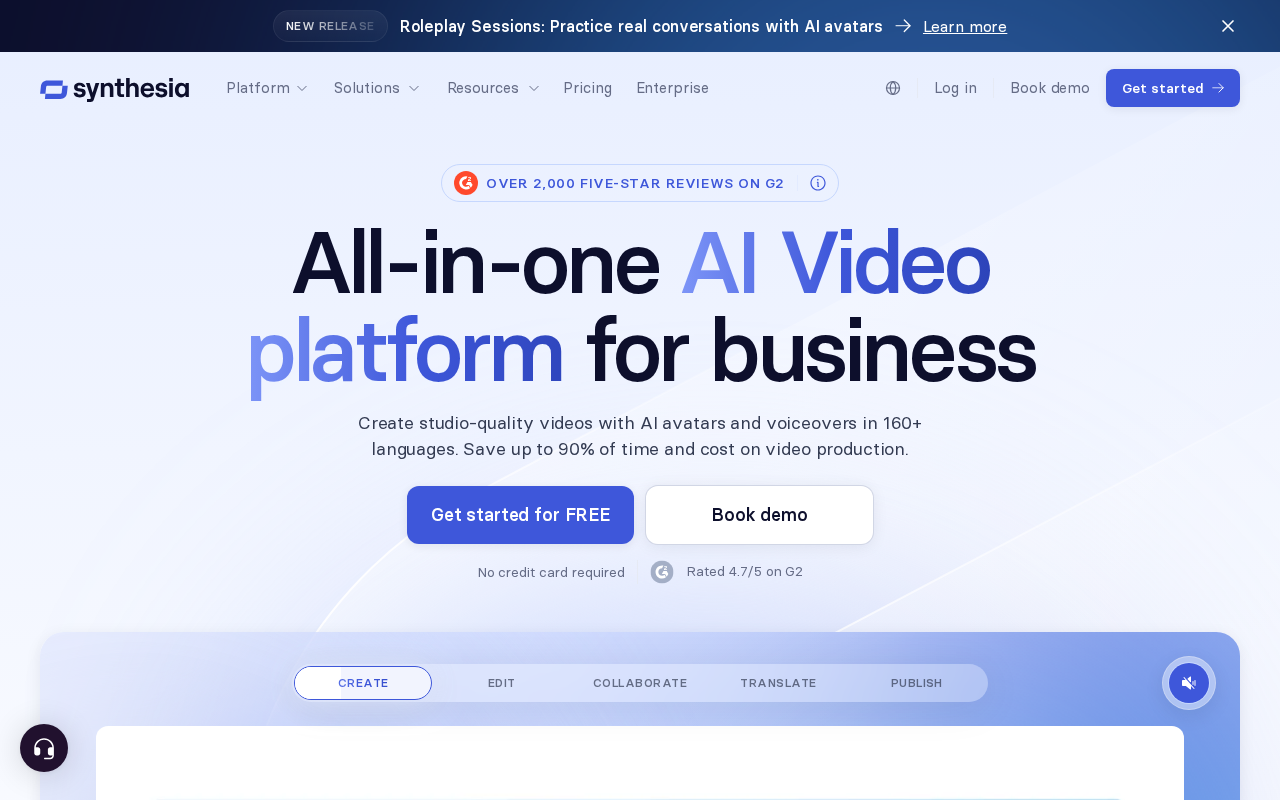
Training video has a shelf-life problem. The process changes, the video doesn’t, and re-shooting means booking people, rooms, and weeks. Synthesia’s answer is to make video from a script and an AI avatar, so updating a course means editing text.
What it does
Pick an avatar and a template, write the script, generate the video. It handles many languages, which matters more than it sounds once your workforce is distributed. The library stays current because iteration is cheap.
Where it fits
Squarely in training, onboarding, and internal comms. That’s not a limitation so much as a job description: avatar-led video reads fine in a compliance module and reads strange as a brand campaign. Buy it for the training library, not the marketing channel.
Worth knowing
It makes content; it doesn’t distribute or track it. Your LMS still does that job. Costs scale with how much video you produce, so it rewards teams that actually have a steady stream of material to make.
When it makes sense
Once your core stack is settled and consistent onboarding or narrative material becomes the bottleneck, especially across languages and locations. L&D and internal communications teams own this one.
Our take
The strongest supporting pick for standardized internal video. Unglamorous, effective, and it solves a real maintenance problem most training teams have given up on.
What it costs
Synthesia’s published plans (as of August 2026): a free Basic tier (10 video minutes/month, 9 avatars), Starter at $29/month ($18 billed yearly, 120 video minutes a year), and Creator at $89/month ($64 yearly) with 360 video minutes a year, 180+ avatars, and API access — plus custom Enterprise with unlimited minutes and personal avatars. The minute allowances are the real constraint: teams producing serious training volume land on Enterprise quickly, so price that conversation early.
Pros and cons
Where it wins
- Update-by-edit genuinely fixes the stale-training-library problem
- Localization into many languages without re-production
- Free tier and cheap Starter make piloting risk-free
- No studios, crews, or scheduling for routine content
Where it hurts
- Minute allowances on self-serve tiers are tight for real training volume
- Avatar-led style suits internal content, not brand-front marketing
- It creates content only — distribution and tracking stay in your LMS
Alternatives to consider
HeyGen competes closely on avatar video with a creator-market slant; Colossyan targets similar workplace-learning use cases. Synthesia’s enterprise features and language coverage keep it the corporate default, but pilot two before committing minutes budgets.
Frequently asked questions
Is Synthesia worth it in 2026?
For L&D and internal comms teams producing recurring training content, yes — the update-by-edit workflow alone justifies it. For occasional or brand-front video, traditional production still wins.
What does Synthesia cost?
Free tier with 10 minutes/month; Starter $29/month ($18 annual); Creator $89/month ($64 annual) with 30 minutes and API access; Enterprise is custom with unlimited minutes. Minute allowances are the binding constraint for teams.
Synthesia vs HeyGen?
Both make avatar video from scripts. Synthesia leans corporate: training templates, enterprise controls, broad language support. HeyGen leans creator and marketing use. For internal training libraries at scale, Synthesia is the safer default.
Transparency: EnterpriseAI.app may receive referral revenue if you sign up through links on this page, at no additional cost to you. Evaluations are completed before referral relationships are considered — see our methodology and disclosure.